
12 Must-Have Tools for Your Cut-and-Sew Toolkit
A cut-and-sew toolkit should support the garment and materials being developed. Tools do not replace pattern knowledge or construction experience, and a designer does not need to buy every item before consulting a professional. These twelve examples explain the tasks behind the equipment.
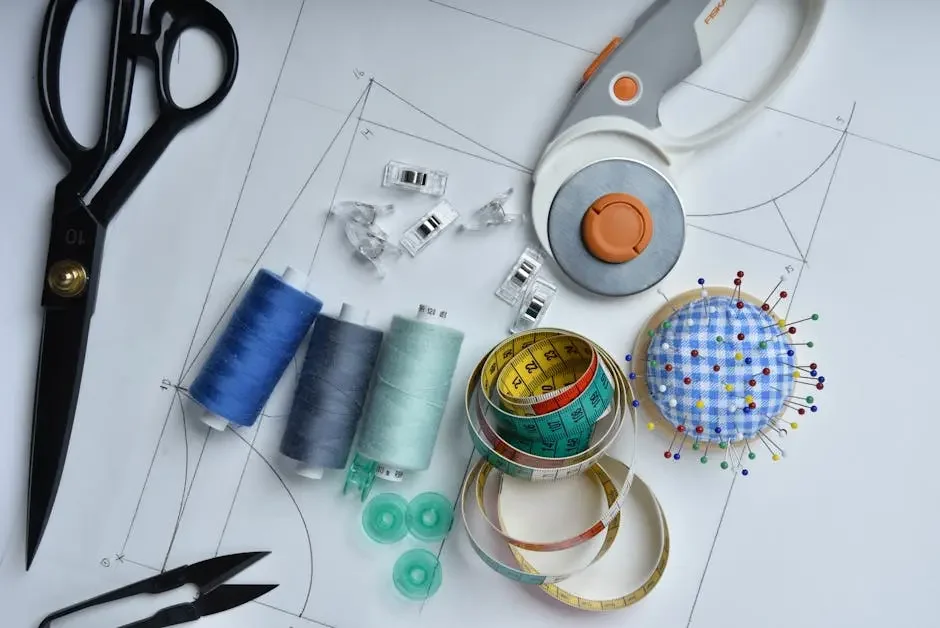
Pattern Preparation and Measurement
Measuring tape: records body or garment measurements using a consistent method.
Straight ruler: supports measured lines, allowances, and checks.
Curved ruler: helps develop and review curved pattern lines.
Pattern paper: provides a working surface for drafting and documenting changes.
Cutting and Marking
Fabric shears: cut the intended material cleanly when kept in suitable condition.
Pattern weights or appropriate holding tools: help control movement during layout and cutting.
Marking tools: transfer necessary references; test removability and compatibility on a scrap first.
Notching or reference-marking tools: support clear assembly information using the method appropriate to the project.
Sewing, Pressing, and Review
A suitable sewing machine: must be appropriate to the material and construction, with settings tested before use.
Appropriate needles and thread: are selected with the fabric and seam requirements in mind.
Pressing equipment: helps shape and finish the garment; heat and moisture should be tested on the material.
A fit form or access to an appropriate fit model: supports review of shape and balance, alongside measurements and movement checks.
Invest in the Process, Not Just the Tools
A tool list does not establish that a pattern fits or a sample is production-ready. Keep the design brief, current pattern, material information, and revision notes organized. For unfamiliar or complex construction, professional development may be more useful than buying equipment without a clear plan.
Explore Patterns World’s pattern making and sample sewing services or contact us with the garment you are developing.